
Nestled at the far eastern edge of Cincinnati, the California neighborhood is a hidden gem that blends idyllic river views, lush parks, and a colorful past. Known for its tight-knit community, natural beauty, and decades-old landmarks, California is a place where history and heritage flow as gracefully as the rivers that define it.
Origins: Where Two Rivers Meet
Located at the confluence of the mighty Ohio and Little Miami Rivers, California enjoys one of the most scenic and strategic locations in the city. Its story stretches back to the earliest days of westward expansion, serving first as a natural crossing and gathering point for Ohio’s original inhabitants and, later, settlers moving west from Cincinnati.
The area was settled in the early 19th century, predominantly by German immigrants who were drawn to the opportunity for farming and trade along the riverbanks. In its infancy, the neighborhood was often referenced as Groveport or Grove Park due to the thick forests and river groves that dotted the landscape.
How California Got Its Name
The official name, “California,” was adopted in 1849, a nod to the Gold Rush that was igniting dreams across the nation. According to local lore, residents gathered at what is now Kellogg Avenue and conspired to rename their fledgling river village after the far-off state, hoping the promising and ambitious spirit of California would bring prosperity to their riverside home. The aspirational naming captured the sense of new beginnings—an ethos that remains part of California’s cultural fabric today.
Key Historical Milestones
- 1849: Renaming to California – The pivotal year the neighborhood claimed its now-iconic name.
- 1876: Establishment of California School – The community’s first school was built on Stewart Road, becoming a nucleus for education and civic life for generations.
- 1911: Opening of Coney Island – On Kellogg Avenue, Coney Island amusement park drew crowds from all over the Tri-State, making California a summer playground for Cincinnati families.
- 1937: The Great Flood – The legendary Ohio River floodwaters submerged much of California, shaping both the physical landscape and the community’s resilience.
- 1970s: Creation of Riverbend Music Center – The addition of this major music and event venue revitalized the neighborhood and solidified its status as an entertainment destination.
Notable Landmarks and Buildings
- Coney Island – Founded in 1886 (and still going strong today), Coney Island remains a beloved attraction. Its historic Sunlite Pool, the world’s largest recirculating pool, is a local landmark in itself.
- California Woods Nature Preserve – Spanning 113 acres on the neighborhood’s northern edge, this lush park preserves some of Cincinnati’s most pristine forests and hosts an educational nature center on Kellogg Avenue.
- The Little Miami River Access – The boat launches near Kellogg and Sutton Avenues have long been a hub for anglers, rowers, and outdoor lovers who cherish direct entry to the water.
- St. Jerome Roman Catholic Church – Established in 1884 on Four Mile Road, this beautiful brick church served as both a spiritual center and social anchor for early residents until closing and merging parishes in the 21st century.
- California Golf Course – Opened in 1935, this hilltop public course still offers sweeping river vistas, drawing golfers across generations.
- Old Firehouse No. 36 – The original structure stands as a testament to the close-knit, self-reliant spirit that has characterized California since its earliest days.
Streets, Parks, and Institutions
California’s main artery, Kellogg Avenue, unspools alongside the river, connecting landmarks and framing the neighborhood’s relaxed yet active way of life. Sutton Avenue, one block in from the riverside, is dotted with community gathering places and quaint homes that date back a century or more. Stewart Road, meanwhile, winds up into the neighborhood’s forested cottage enclaves and past the old schoolhouse site.
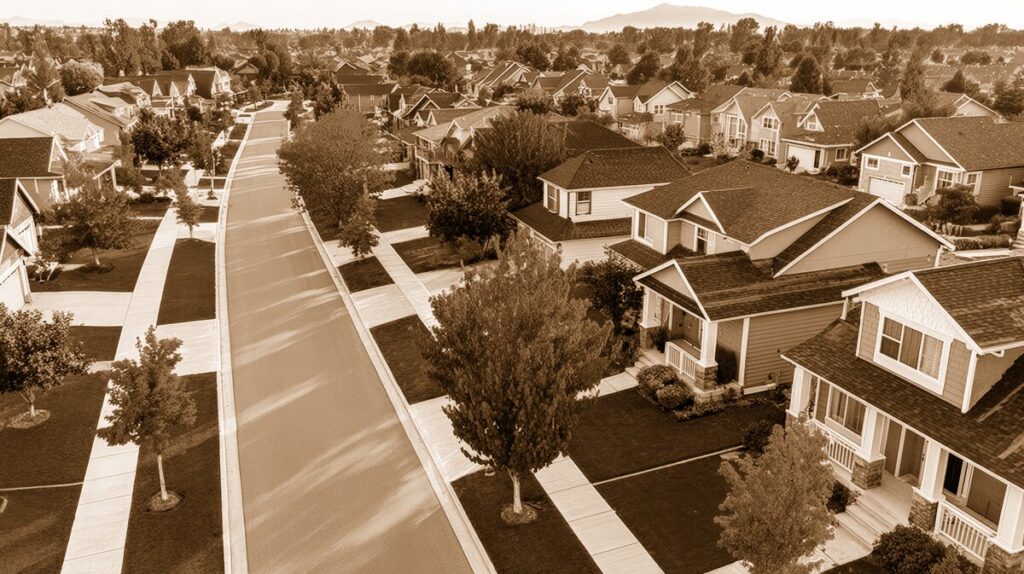
Today, streets are lined with a blend of classic river cottages, mid-century homes, and newer developments—reflecting both the preservation and progress that residents prize.
Parks remain at the heart of local identity. California Woods is renowned for its hiking trails and quiet wildlife; Kellogg Avenue’s riverside parks invite bikers and picnickers; and the Berger Park boat ramp bustles on sunny weekends.
Evolution Over the Decades
California has always been shaped by the rivers—and by its resilience. Floods tested and toughened the community, prompting the construction of raised homes and embankments. The evolution from a sleepy mill and farming enclave to a destination for recreation and music mirrored broader shifts in Cincinnati, yet always with a distinct local flavor.
Even as Coney Island and Riverbend have drawn new visitors—and as the area has added bike trails, new housing, and environmental preserves—California has stayed small and neighborly. Residents still wave from porches, and many families boast roots going back generations.
Efforts to balance growth with heritage remain central. Longtime residents welcome improvements to local parks and streetscapes, advocating for responsible development to protect the rustic river character. The California Community Council, one of Cincinnati’s most active neighborhood groups, champions local events, green space initiatives, and floodplain awareness.
The Spirit of California Today
What makes California special isn’t just its rivers or recreation, but its sense of place. Neighbors look out for each other. The slow curve of Kellogg Avenue, lined with shade trees and glimpses of river, feels like an invitation to step back in time.
From the echoes of steamboats to the thrill of a summer ride at Coney Island, California holds tight to its history—even as it looks ahead to the future. For visitors, it’s a beautiful riverside escape. For locals, it’s home—a place where heritage runs as deep as the Ohio and Little Miami themselves.